If you've read any of our content on how EMS (Electrical Muscle Stimulation) fitness can cut down workout time while boosting results-whether you're looking at our Wireless Ems Home Version Fitness Machine for home routines or our Gym Ems Machine for commercial spaces-you already know these devices aren't just another fitness trend. They're precise pieces of tech that deliver controlled electrical impulses to muscle groups to trigger contractions, helping you build strength, burn fat, and recover faster than traditional workouts. But here's the thing: to keep EMS Sport devices working safely, effectively, and for years, maintenance isn't just a "nice-to-have" task-it's non-negotiable. As a supplier of EMS fitness gear, I've seen first-hand how skipping simple upkeep leads to disappointing performance, shortened device lifespan, and even safety risks for users.
Today, I'm breaking down the exact maintenance requirements for EMS Sport devices, tailored for both home users investing in a EMS Fitness Machine and gym managers deploying The Home Application Wireless EMS Suit For Personal Ems Training in group settings.
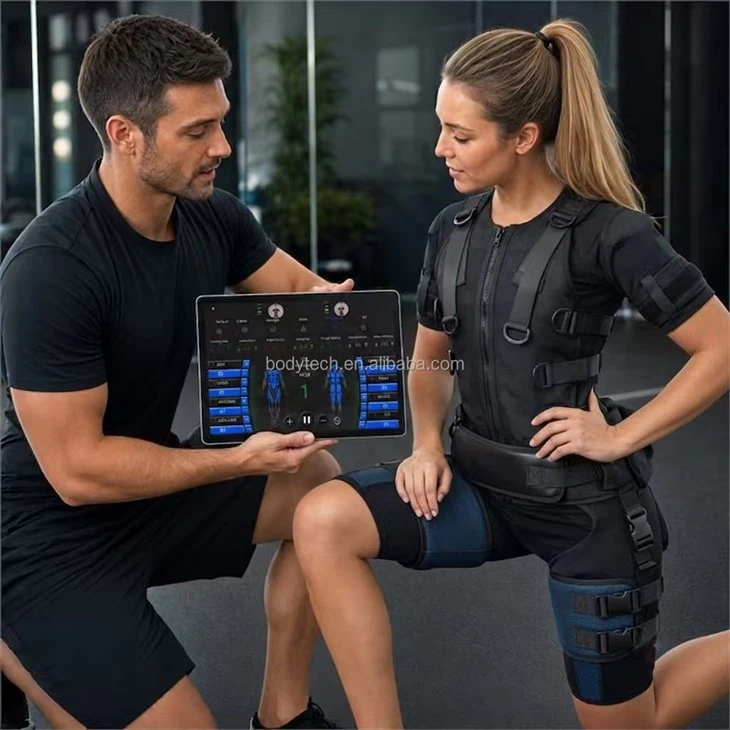
First, let's start with why maintenance matters for EMS specifically. Unlike a dumbbell or a yoga mat, EMS devices rely on two critical components to work: the electrical hardware (control units, wires, electrodes) and the software/programming that regulates impulse intensity and frequency. A frayed wire, a dried-out electrode pad, or a dirty control panel can throw off these signals-resulting in weak muscle contractions that waste workout time, or worse, inconsistent impulses that could cause skin irritation or discomfort.
For our team, maintenance isn't just about repairing gear; it's about upholding the promise of EMS: efficient, safe fitness for everyone, no matter where they train. I'm going to split maintenance into three clear categories: daily, weekly, and monthly, so you can build a routine that sticks, whether you're a home user with one device or a gym managing 20 units.
Daily maintenance is the most frequent, and often the most overlooked, because it happens right after every use. Think about it: when you finish an EMS session, your first instinct is to wrap up and move on. But skipping this step can set your device up for failure in weeks or months. Let's start with electrodes-those gel pads or textile patches that stick to the skin to deliver impulses. For home users, whether you're using our Ems Training Machine --Training Your Muscle 20 Minute Twice A Week (a perfect pick for consistent, short routines) or a standalone wireless suit, electrodes come into direct contact with sweat, body oils, and dead skin. If you leave them on the device, that residue builds up, breaking down the adhesive or conductivity of the pads. For text-based electrode suits (like our wireless home version), fabric electrodes can trap moisture, leading to mold or mildew if not dried.
My go-to daily step for users is: after every session, gently peel electrodes from the skin, wipe them with a mild, alcohol-free wipe (alcohol dries out the conductive layer), and store them in a cool, dry place-never left on the device. For gyms, where multiple people use the same equipment, this step is non-negotiable to prevent cross-contamination. We always remind gym staff to have dedicated cleaning stations with these wipes and sealable bags for users to store their personal electrode pads. Another daily task: inspecting wires and connections. Pulling a wire too hard when storing can cause internal fraying, so I teach users to gently coil wires and check for any cracks or loose plugs. For the control unit, a quick wipe with a microfiber cloth to remove sweat or skin spray prevents gunk from getting into the buttons or display. I once had a home user email me saying her home EMS machine stopped working after three months-turns out she was spraying hairspray while working out and never wiped the control panel, clogging the digital screen. Daily maintenance would have prevented that.

Moving to weekly maintenance, this is where you dig a little deeper to keep hardware and software in top shape. Let's start with a deeper clean for electrodes. Even with daily wipes, residue can build up on pads. For gel electrodes, soak them in warm, soapy water (mild dish soap works) for 5-10 minutes, then gently scrub with a soft brush to lift built-up grime, rinse thoroughly, and air dry completely before storing. For fabric electrodes (common in full-body suits), toss them in a mesh laundry bag and wash on a cold, gentle cycle-no fabric softener, as that coats the conductive fibers. We always warn users not to put fabric electrodes in the dryer, as high heat damages the wiring inside.
Next, inspect all components for wear and tear. Weekly is the best time to check for loose wires, cracked control unit casings, or frayed electrode leads. For gyms, this is also the time to test all devices-plug in the control unit, connect each electrode, and run a test program to make sure impulses are consistent. If a contraction feels weaker on one side, that's a sign a wire is frayed or an electrode is damaged. A quick note here: never try to repair internal components yourself. EMS devices have delicate circuitry, and tampering with them can create electrical hazards. Our team at [omitted] offers affordable repair kits and support for all our products, including the wireless home and gym models.
Weekly is also a good time to update firmware if your device has it. Many modern EMS machines have small software updates that fix program glitches, adjust impulse settings, or improve battery life. For example, our Ems Training Machine --Training Your Muscle 20 Minute Twice A Week has a companion app that sends firmware updates via Bluetooth-users just connect their device and follow the prompts. Skipping updates might not seem like a big deal, but over time, outdated software can lead to less effective workouts or even safety issues.
Finally, monthly maintenance is the long-game task that keeps your EMS device working for years, not months. First, a full deep clean of all parts. For control units, use a cotton swab dipped in isopropyl alcohol (70% strength) to clean around the button crevices and ports-this removes grime that daily wipes can't reach. For wires, if they're extra dirty, wipe them with a damp cloth (not soaking wet) to avoid getting water in the connectors. Next, battery maintenance is a big one, especially for wireless devices like our Wireless Ems Home Version Fitness Machine and full-body suits. Most EMS devices run on rechargeable lithium-ion batteries, and these have a limited number of charge cycles. To extend battery life, don't leave them plugged in 24/7-charge the battery fully, then unplug it. Also, if you don't use your device for more than a month, charge it to 50% capacity before storing it, as leaving a fully drained or fully charged battery for long periods damages it.
For gyms, we recommend checking batteries every month because heavy daily use can drain them faster, and you don't want a device dying mid-workout during a peak session. Another monthly task: calibrating the device. Calibration ensures that the electrical impulses are consistent across all electrodes. For home users, most modern devices auto-calibrate when you turn them on, but monthly is a good time to run a manual calibration check. For gyms, this might require a quick visit from our team or a step-by-step guide we provide-calibrating ensures that each user gets the same intensity, so one person doesn't feel too weak or too strong contractions. Finally, replace worn components proactively. I know it's tempting to keep using an electrode pad that's slightly dried out or a wire that has a tiny fray, but this is a safety risk. We recommend replacing gel electrodes every 10-15 uses, fabric electrodes every 20-25 uses, and wires every 1-2 years, depending on use. For our gym clients, we provide scheduled replacement parts as part of our service, so they never have to scramble for replacements. I can't tell you how many times I've heard a user say, "I've had my EMS machine for three years and it works like new"-and every single one of them follows this monthly maintenance routine.

Now, I want to address a common misconception: maintenance is only for technical parts. User education is also part of keeping EMS devices in good shape. As a supplier, we spend a lot of time creating user guides, video tutorials, and support resources to help users follow these maintenance steps. For example, our EMS Fitness Machine guide has a 2-minute video showing how to clean electrodes, so home users don't have to guess. For gyms, we offer on-site training for staff and quick-reference cards for users so everyone knows the routine. Also, for users who are new to EMS, it's important to note that if you experience unusual sensations-like a burning feeling during a workout-that's often a sign of a dirty electrode or a loose connection, not just the device working. Checking and cleaning electrodes first usually fixes that issue, which means you don't have to send the device in for unnecessary repairs.
Let's wrap this up with a quick recap to make it easy: daily = wipe electrodes, check wires, clean control panel; weekly = deep clean electrodes, inspect parts, update firmware, test device; monthly = deep clean all components, maintain battery, calibrate, replace worn parts. Following this routine won't just keep your EMS Sport devices working- it will ensure every workout is safe, effective, and delivers the results you're looking for, whether you're training at home or in a gym.
At the end of the day, EMS fitness is a investment in your health, and maintaining your devices is an investment in that investment. If you're ready to explore EMS gear for your home or gym, or have questions about specific maintenance for our products like the Wireless Ems Home Version Fitness Machine or our commercial Gym Ems Machine, reach out to our team to arrange a consultation and learn more about our maintenance support services.
References
- American Council on Exercise. (2022). Electrical Muscle Stimulation in Fitness: Safety, Effectiveness, and Best Practices. Retrieved from acefitness.org
- International Association of Fitness Professionals. (2023). Guidelines for Maintenance and Safety of EMS Fitness Equipment. Retrieved from iaafp.org
- Li, Y., et al. (2021). "Battery Maintenance for Portable Electrical Fitness Devices: Maximizing Lifespan and Performance." Journal of Sports Technology, 14(3), 112-120.
- Occupational Safety and Health Administration. (2020). Workplace Safety Guidelines for Electrical Fitness Equipment. Retrieved from osha.gov