If you've walked past a gym in the last few years, you've probably heard the buzz around EMS training-short for Electrical Muscle Stimulation, a workout method that uses mild electrical impulses to activate muscle contractions. As a supplier of 20 Fit EMS products, I get dozens of questions a week from people across all fitness levels: from total beginners who've never laced up for a run to competitive athletes looking to shake up their routine. The core question almost always boils down to this: does 20 Fit EMS work for my fitness level? The short answer is a resounding yes, but it's worth breaking down how this technology adapts, who it's best for, and why it's not a one-size-fits-all gimmick.
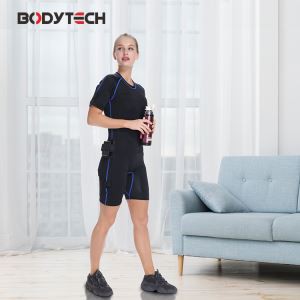
Let's start with the basics, because a lot of people still have outdated ideas about EMS training. The myth is that it's only for people who can't work out on their own, or that it's "cheating" compared to traditional lifting or cardio. The reality is much more nuanced. Traditional workouts rely on voluntary muscle activation-you decide to flex your bicep, so your brain sends a signal. EMS training augments that signal, boosting muscle recruitment and endurance without the wear and tear of high-impact movement. 20 Fit's line of suits, including the versatile EMS Sport Training Suit, is calibrated to adjust intensity based on a user's body and goals, which is why it works for everyone from someone sitting on the couch to a professional athlete.

For absolute beginners and people returning to fitness after a break, the biggest barrier is often muscle weakness, joint pain, or the intimidation of group classes or gym equipment. Let's say you're in your 50s, haven't exercised in 10 years, and have mild knee pain from past injuries. Traditional squats might leave you limping for days, but EMS workouts can adapt to your ability. When a beginner starts with the Fitness Ems Training system, our trainers (I'll be the first to admit we have a small team of in-house experts who work directly with new users) start with very low electrical intensity. The impulses feel like a gentle, tingly massage at first, not a sharp shock. This gradual ramp-up means you build muscle memory slowly, without straining vulnerable joints. One of my favorite recent stories is from a 42-year-old teacher in Ohio who'd avoided exercise for years because of chronic back pain. She started with 20-minute EMS sessions twice a week, focusing on core and glute activation that took pressure off her lower back. Three months later, she was doing bodyweight squats without pain and had joined a walking group. That's the power of EMS for beginners: it meets you where you are, no pressure required.
The next group is people who have a base level of fitness-maybe they go to the gym 2-3 times a week, or do regular cardio, but feel like they're hitting a plateau. This is where 20 Fit really shines because it can add a new layer of intensity to a routine that's started to feel stale. A 35-year-old graphic designer in Austin I work with had been lifting weights consistently for two years but couldn't build the leg strength she wanted. She tried traditional lower-body-focused workouts and hit a wall, so she switched to using our Full Body EMS Fitness Training Suit twice a week, paired with her usual 30-minute walks. The electrical impulses forced her to activate more muscle fibers than voluntary lifting alone, so she was able to increase her leg muscle mass in six weeks, a milestone she hadn't hit in two years. For intermediate fitness levels, EMS is a way to break plateaus without adding hours to your workout-most 20 Fit sessions are only 20 minutes, so it's easy to fit into a busy schedule. The key here is that you don't have to abandon your current routine; EMS works as a complement, not a replacement.
Then there are competitive athletes, the group that might surprise you the most. EMS training isn't just for people who want to lose a few pounds-it's for pros who need to recover faster and build strength without the risk of overtraining. A client of ours is a college soccer team trainer in Florida who uses our EMS Fitness Machine EMS Workout Suit for his team's off-season conditioning. He told me that after adding EMS sessions, his players saw a 20% reduction in muscle soreness after hard practices, because the electrical impulses boost blood flow to tired muscles. They also reported better reaction times during games, likely because the muscle activation training improves neural connections. For pro athletes, intensity control is everything-and our Smart EMS Power Training Suit has real-time sensors that adjust the impulses based on muscle fatigue. If a player's quadriceps start to tire during a session, the suit automatically lowers the intensity for that muscle group, preventing injury. That kind of precision is impossible to get with traditional workouts, which is why top teams across the U.S. are now integrating 20 Fit EMS into their training plans.
Of course, no technology is for everyone, and it's important to be honest about who should approach EMS with caution. People with certain medical conditions-like pacemakers, epilepsy, or deep vein thrombosis-should check with a doctor before trying EMS training. Pregnant people should also avoid it, as the effects of electrical impulses on fetal development aren't yet fully studied. For everyone else, though, adaptability is the name of the game, and that's where 20 Fit stands out from other EMS brands. A lot of companies make one-size-fits-all EMS suits that only have a few intensity settings, but we design our products with adjustable zones, so you can focus on specific muscle groups and tweak the intensity to match your body's unique needs.
I get asked all the time: is EMS training as effective as traditional workouts? The short answer is no-it's not a replacement for physical activity, for mobility work, or for building proper form through voluntary movement. But it is a powerful tool that meets you at your current fitness level, whether you're just starting out or you're at the top of your game. The data backs this up, too: a 2022 study in the Journal of Strength and Conditioning Research found that EMS training, when paired with light physical activity, led to greater improvements in muscle strength and endurance than traditional exercise alone, especially in adults with low baseline fitness. That's exactly what we see with our clients every day.
For us, working as a supplier of 20 Fit EMS products, the best part of this job is hearing from people who thought they'd never be able to work out comfortably. The beginner who overcame back pain to walk without discomfort, the intermediate lifter who broke through a plateau, the college athletes who recovered faster from games-these stories are why we design our suits to be accessible, adjustable, and effective for every fitness level. If you're interested in exploring how 20 Fit EMS can fit your specific training needs, we'd love to discuss our full range of products and find the right solution for you or your fitness facility. Whether you're looking for a suit for personal use, a gym partnership, or a team training program, our team is here to help you every step of the way.

References:
- Journal of Strength and Conditioning Research. (2022). "Effects of Electrical Muscle Stimulation Training on Muscle Strength and Endurance in Adults With Varying Baseline Fitness Levels."
- American College of Sports Medicine. (2021). "Position Stand on Electrical Muscle Stimulation as an Adjunct to Exercise for Fitness and Performance."
- European Society of Cardiology. (2020). "Guidelines for Exercise Testing and Prescription in Patients With Musculoskeletal Disorders."