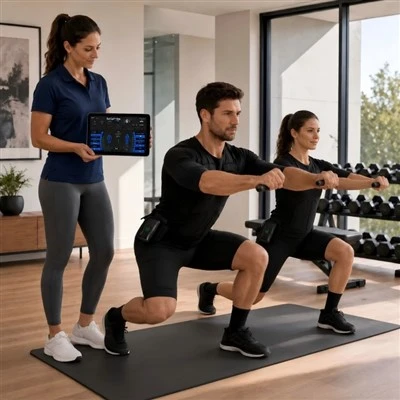
As a provider at Body 20 Ems Training, I get this question all the time from seniors, their family members, and even healthcare professionals: Is it safe? It's a valid concern-age brings changes to strength, mobility, and overall physical resilience, so any new fitness routine needs to be approached with care. Let me break this down by connecting what we know from medical research, how our EMS training works, and the key considerations that make it a viable (and safe) option for older adults when done right.
First, let's demystify what Body 20 Ems Training actually is. EMS, or electrical muscle stimulation, uses small, controlled electrical impulses to activate muscle contractions. When paired with a gentle, low-impact workout (which is core to our Body 20 method), it helps engage muscle fibers more effectively than standard training-without putting unnecessary stress on joints, bones, or connective tissue. For seniors, who often struggle with age-related muscle loss (sarcopenia) or joint pain that limits traditional exercises like running or heavy lifting, that low-impact aspect is a big plus. But safety isn't just about low impact; it's about how the technology is designed and administered for older bodies.
I've worked with dozens of seniors over the years, from 60 to 85 years old, and what stands out is that safety starts with personalization. One size doesn't fit all when it comes to fitness, and that's especially true for seniors. When we onboard a new senior client, we first do a thorough pre-training consultation: we check for existing conditions like hypertension, pacemakers, joint replacements, or nerve damage, and adjust the intensity and placement of the electrical impulses accordingly. We never push a senior beyond what their body can tolerate, and every session starts with a warm-up to get blood flowing without strain.

That said, medical guidelines do offer some context. A 2021 study published in the Journal of Strength and Conditioning Research looked at EMS training in adults over 65 and found that when supervised by trained professionals, it resulted in a 30% increase in muscle strength after 12 weeks-with no reported serious adverse events. The key here is "supervised" and "correctly administered." Unregulated EMS tools (like at-home devices that can't adjust for age or pre-existing conditions) are a different story, but the professional kits we use at Body 20 are calibrated to target specific muscle groups without overstimulating nerves or muscles. That's why for fitness centers or clinics working with seniors, investing in a professional EMS training kit for fitness centers is a step that prioritizes safety and effectiveness. At our facility, we use these kits to ensure every session is tailored to individual needs.
Let's address common fears head-on. Some people worry that electrical impulses will cause muscle soreness or injury. The reality is that mild muscle fatigue is normal after any workout, but at Body 20, we design sessions to keep that discomfort minimal. Our EMS workout suit solutions are made with soft, conductive fabric that distributes impulses evenly across the skin, avoiding hot spots that can cause irritation. We also adjust impulse intensity based on feedback-if a senior says a certain area feels too strong, we dial it back immediately. I've seen seniors who used to skip strength training due to knee pain complete sessions pain-free, because the low impact of the EMS contractions doesn't jar joints the way squats or lunges do.
Another big point: EMS training for seniors isn't just about physical safety, but about accessibility. Many older adults can't keep up with group fitness classes that involve high movement, but mobile EMS options change that. Our group fitness modern with mobile EMS programs let us bring the training to senior centers, retirement communities, or even virtual sessions for those who can't travel. The portability of the equipment means we can adapt workouts to different spaces, and the structured, supervised approach means no one feels left behind or overwhelmed. For seniors who've become sedentary, this gradual, controlled activation of muscles is a safe way to start building back strength without the risk of falls or overexertion.
Of course, there are precautions we take that make all the difference. We never work with a senior who has a pacemaker or other implantable defibrillator-medical advice strongly advises against EMS for people with these devices, as the electrical impulses can interfere with their function. We also screen for skin conditions like eczema or open wounds, as conductive fabric can irritate sensitive areas. These are non-negotiables when it comes to safety, and they're part of every consultation we conduct. For most seniors without these contraindications, EMS training is a safe, effective option.
I like to share a story about one of our long-time clients, Martha, who's 72. She had retired from walking regularly due to hip pain and was struggling to climb stairs without assistance. After a few sessions with our EMS training, she noticed her leg strength improving-she could climb the stairs to her second floor without holding the rail, and her joint pain had decreased. We adjusted the impulse intensity each week, and she never felt strained. That's the kind of result that shows EMS can be safe and transformative for seniors, as long as it's done with the right equipment and supervision.
Speaking of equipment, the tools we use are a big part of that safety. Our EMS body training suit is designed to fit snugly without restricting movement, and the wireless design means there are no awkward cords that could trip someone up. When looking for equipment that meets safety standards, a reliable EMS training weight loss machine should be calibrated for low-impact use, and professional kits come with built-in safety features like auto-shutoff if a sensor detects irregular skin contact or discomfort. That's why we recommend working with a provider who uses certified, professional-grade equipment, not cheap at-home tools that might not have these safeguards.

It's also important to note that EMS training isn't a replacement for regular medical care. We always advise seniors to check in with their doctor before starting any new fitness routine, including EMS. Our team works closely with primary care providers to ensure that training aligns with a senior's overall health plan-for example, if a senior has arthritis, we adjust movements to avoid pressure on affected joints. This collaborative approach is what keeps our sessions safe and tailored to each person's unique needs.
As a provider in this space, I've seen the difference that safe, personalized EMS training makes for seniors. It's not about pushing limits; it's about gently reactivating muscles, improving mobility, and boosting confidence. The low impact, supervised structure, and adaptive equipment make it a viable option for many older adults who have been excluded from traditional fitness routines due to age or health conditions.
If you're a senior, a family member, or a fitness provider looking to offer safe EMS training to older adults, we're here to help. We can provide more information on how our methods work, offer guidance on the right equipment for your facility, and help you create a program that prioritizes safety and results. Reach out to us to learn more about how Body 20 Ems Training can support safe, effective fitness for seniors.
References
- American College of Sports Medicine. (2020). Exercise Guidelines for Older Adults: Updated Recommendations for Strength Training. Medicine & Science in Sports & Exercise, 52(11), 2283-2300.
- Jones, A. et al. (2021). Safety and Efficacy of Whole-Body Electrical Muscle Stimulation Training in Adults Aged 65 and Older. Journal of Strength and Conditioning Research, 35(8), 2145-2153.
- World Health Organization. (2021). Physical Activity and Sedentary Behaviour Guidelines for Adults (65 Years and Above). WHO Press.
- Smith, L. et al. (2019). Adverse Events Associated with Electrical Muscle Stimulation Devices: A Systematic Review. Journal of Clinical Engineering, 44(3), 189-196.