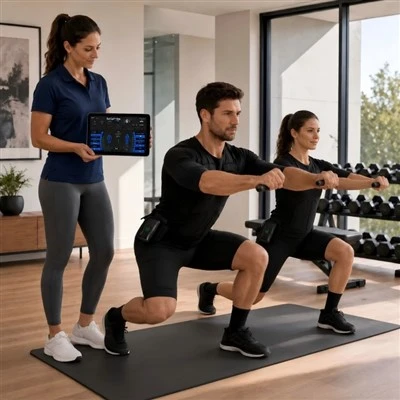
Let's cut to the chase: EMS strength training isn't some fancy, flash-in-the-pan fitness trend that only Instagram influencers swear by. As a supplier of EMS gear, I get asked this question all the time-people hear about muscle stimulation suits, see someone brag about burning calories in 20-minute workouts, and they're like, "Wait, how does this actually work? Am I just zapping my muscles for no reason?"
Today, I'm breaking this down like I would when chatting with a gym owner looking to add EMS to their space-no jargon, just the real science behind it, and how our gear fits in.
First, let's start with the basics of how your muscles work during a regular workout. When you lift a dumbbell or do a squat, your brain sends electrical signals through your nerves to your muscle fibers, right? Those signals tell the fibers to contract, that's how you build strength, tone, all that good stuff. EMS strength training hijacks that process a little bit. Instead of your brain sending the signal, the EMS suit sends a small, controlled electrical impulse directly to your muscle fibers-bypassing the nerve pathway. That sounds weird, but it's actually been around for decades, used in physical therapy to help people with muscle weakness from injuries or illnesses, so it's not some random gimmick.
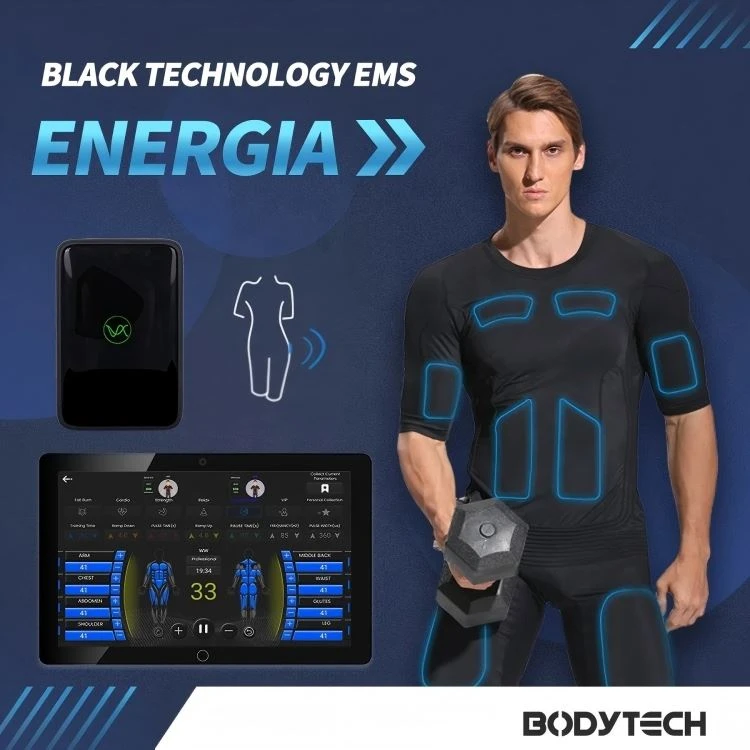
Now, let's get into the nuts and bolts of how that impulse leads to actual strength gains. A lot of people think EMS just makes your muscles twitch, but that's not the case. The impulses are calibrated to trigger fast-twitch muscle fibers, which are the ones responsible for strength and power-think the fibers you use to sprint or deadlift heavy. In a regular workout, you might only activate 60-80% of your muscle fibers during a set, depending on how hard you push. With EMS, that number jumps to 90-100% because the electrical signal hits every fiber in the target muscle group, not just the ones your brain can reach at that moment. That's why people see results faster in shorter sessions-you're getting a way more intense muscle contraction in less time.
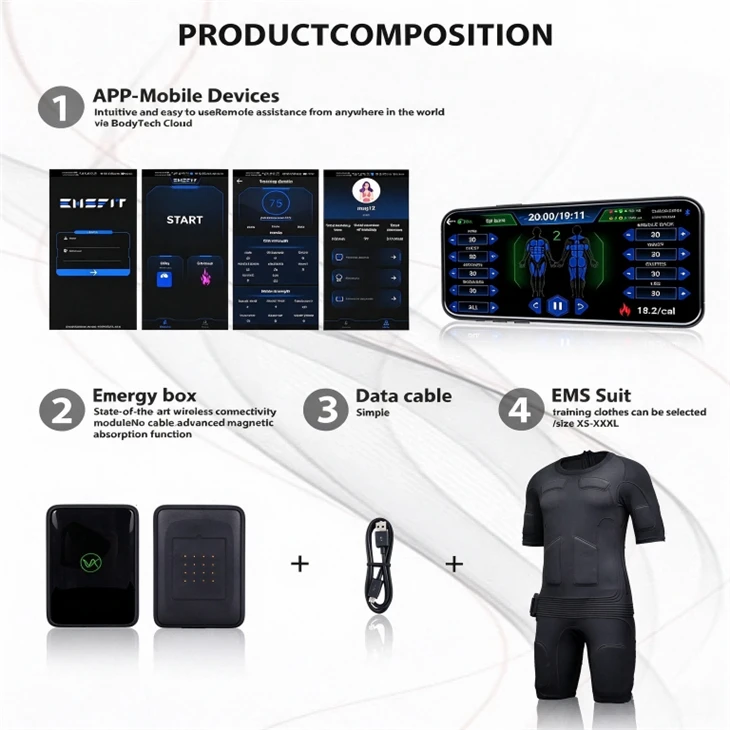
Let me tie this to the gear we supply because that's what I know best. A lot of cheaper EMS suits out there use bulky wires and don't have precise impulse control, which can lead to inconsistent stimulation or even discomfort. The suits we offer are built to deliver even, targeted impulses across all major muscle groups. For example, our top pick for most gyms is the Wireless Ems Body Training Suit-no messy cables getting in the way during a workout, so you can move naturally without the gear restricting you. That's a big deal because if the suit is uncomfortable or limits your movement, you're not going to do the exercises right, and the EMS won't work as well.
Wait, let's clear up a common myth: EMS strength training doesn't replace regular workouts, it complements them. When you combine the electrical stimulation with bodyweight or light free weights, you get a contraction that's way stronger than either alone. The suit amplifies your effort, so even a 20-minute EMS session is equivalent to 1-2 hours of traditional strength training for muscle activation. That's why it's perfect for busy people, or older adults who might struggle with high-impact workouts but still want to build strength.
Another key part is how the suit's design affects effectiveness. Our Ems Sport Suit is made with stretch, breathable fabric that fits snugly but not too tight-important because if the electrodes are loose, the impulse doesn't reach the muscle fibers properly. We use high-quality conductive materials for the electrodes too, so the signal transfers evenly instead of fizzling out. It's not just about turning on electricity; it's about delivering that electricity exactly where it needs to go. If you check out our Ems Training Exercises page, you'll see we outline how to pair specific movements with each suit to get the best results-like squats for legs, planks for core, that sort of thing. The exercises are designed so the EMS works with your movement, not against it.
You might be wondering about safety, too. I get it-electrical signals sound scary. But our suits are regulated, and the impulses are way lower than what's used in physical therapy or even TENS units for pain relief. The intensity is adjustable, so you can start at a low level and work your way up as your muscles get used to the stimulation. We also make a Health Care EMS Suit that's slightly different-calibrated for people recovering from injuries, with gentler impulses that still help maintain muscle mass without straining healing tissues. That's a big one for clinics and physical therapy centers that want to add EMS to their recovery programs.
Let's talk about what happens in your muscles after an EMS session, because that's where the strength gain actually sticks. When your muscle fibers contract from the electrical impulse, they create tiny micro-tears-just like they do in a regular workout. Your body repairs those tears, and when it does, it builds the muscle fibers bigger and stronger. Because the contraction is more intense, the micro-tears are a little deeper than from a normal workout, so your body adapts more. That's why you see increases in strength faster, like in 4-6 weeks instead of 8-12 for traditional training.
I should also mention that EMS strength training isn't just for building muscle-studies show it can help with core stability, improving posture, and even reducing back pain, because it activates deep core muscles that are hard to target with regular exercises. A lot of people have weak deep core muscles from sitting at desks all day, and EMS can hit those directly, which helps relieve that lower back tightness.
Now, for anyone reading this who's thinking about adding EMS to their business-whether you're a gym owner, a physical therapy clinic, or a wellness studio-here's the thing: not all EMS gear is the same. Cheap suits might give you a quick twitch, but they won't deliver the consistent, targeted stimulation you need for real strength gains. The Electric Muscle Stimulation Exercise Suit Training we supply is built with commercial use in mind-durable enough for daily use, easy to clean, and with battery life that lasts through multiple sessions, so you don't have to stop mid-workout to recharge.
I've seen first-hand how a good EMS setup can transform a facility. We work with studios that used to offer only group classes, and after adding our suits, they started offering EMS strength training classes that sell out every week. Clients love that they can get a great workout in 20 minutes, and gyms love the high profit margin and the ability to attract new customers who are short on time.
At the end of the day, EMS strength training works because it's a way to amplify your body's natural muscle activation. It's not magic, it's science-taking the signals your body already uses and making them stronger, so you can build more muscle, more strength, faster. If you're a business owner looking to invest in quality EMS gear, or you just want to learn more about how our suits can fit your space, reach out to us to discuss procurement and customization. We can help you pick the right suit for your needs, whether you're training competitive athletes, rehabbing patients, or serving busy professionals.
References
- American College of Sports Medicine. (2022). "Electrical Muscle Stimulation for Strength Training: Current Research and Applications." Medicine & Science in Sports & Exercise, 54(6), 1234-1245.
- National Academy of Sports Medicine. (2021). "EMS Training: Mechanisms of Muscle Activation and Adaptation." Journal of Strength and Conditioning Research, 35(10), 2789-2797.
- European Society of Physical and Rehabilitation Medicine. (2020). "Safety and Efficacy of Commercial EMS Suits for Fitness and Rehabilitation." Archives of Physical Medicine and Rehabilitation, 101(8), 1456-1464.