


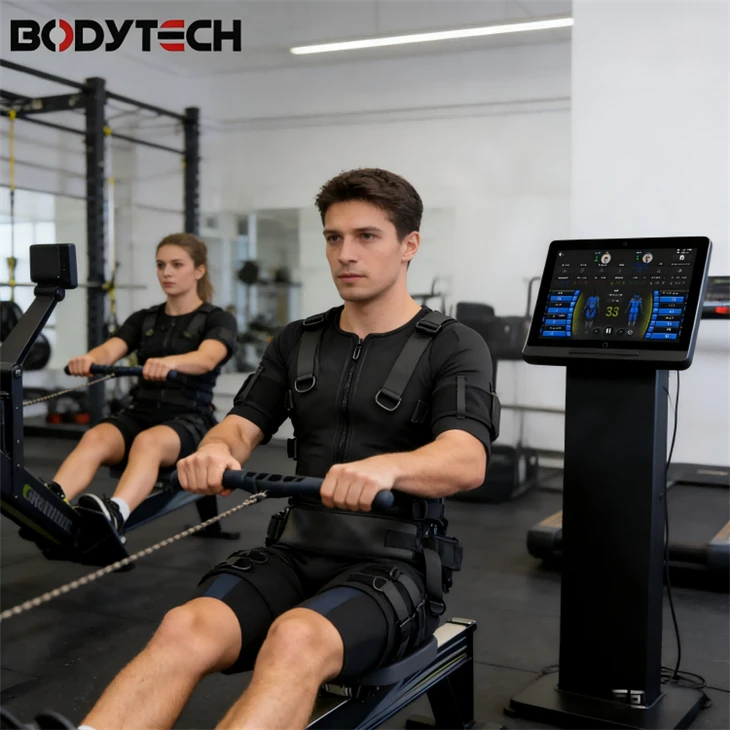

EMS "Shop-in-Shop" Model in Gyms:
What Hidden Operational Challenges Should Owners Expect?
Target audience: Gym owners / Fitness club operators / Investors exploring EMS integration

EMS training as"shop-in-shop"Model in Gyms
For many traditional gyms, adding EMS training as a "shop-in-shop" service inside the existing facility has become an increasingly popular strategy.
The idea seems straightforward:
▶EMS sessions are short (about 20 minutes)
▶Space requirements are small
▶Premium pricing is possible
▶It adds a high-value service without expanding the gym area
However, once gyms begin operating EMS inside their facilities, several hidden operational challenges often appear.
Understanding these risks early can help gym owners implement EMS Training successfully.
1. Positioning Conflicts with Existing Gym Services
A common challenge is unclear positioning between EMS training and traditional fitness programs.
Typical situations include:
▶Members expecting EMS to replace all workouts
▶Trainers unsure how EMS integrates with normal training plans
▶Confusion about whether EMS is a premium service or included benefit
Without clear positioning, EMS may create internal service conflicts rather than additional revenue.
Successful gyms usually define EMS as: A specialized personal training service, not a replacement for the gym floor.

2. Trainer Adaptation and Training Quality
EMS training requires a different coaching approach compared with traditional gym instruction.
Challenges may include:
▶Trainers unfamiliar with EMS stimulation control
▶Difficulty coordinating EMS impulses with exercise movements
▶Inconsistent training experiences between coaches
Without proper trainer education, EMS sessions can feel either too weak or too intense for clients.
Professional equipment systems with intuitive control interfaces and stable pulse output can help trainers adapt more easily.
Manufacturers such as BODYTECH focus on designing EMS systems specifically for commercial studio environments.
3. Scheduling and Space Management
EMS sessions are short but require structured scheduling.
Common issues include:
▶Limited suits available during peak hours
▶Client waiting times between sessions
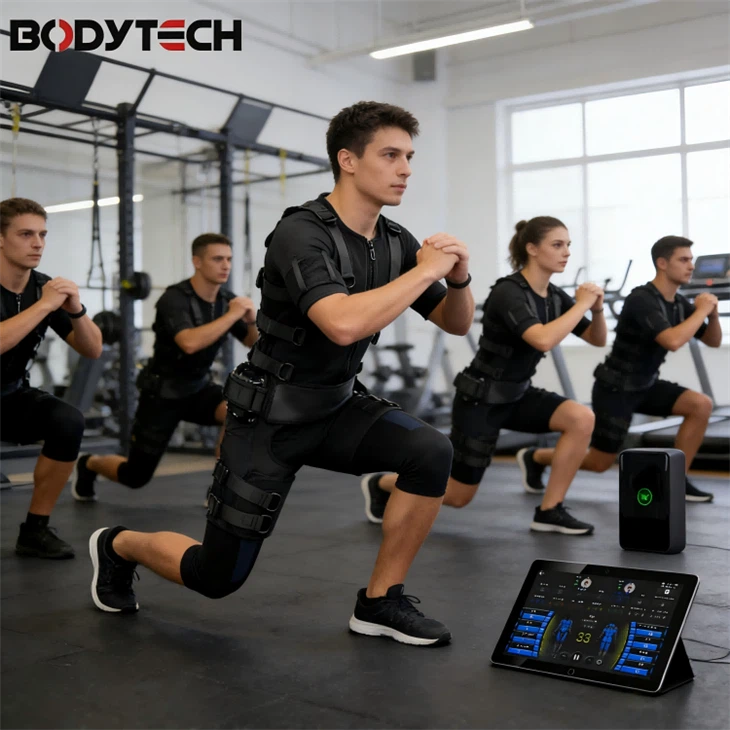
▶Difficulty managing group EMS sessions efficiently
A well-designed EMS configuration should match the gym's daily traffic and trainer availability.
For example:
✔ small EMS area with controlled booking
✔ semi-private EMS training sessions
✔ dedicated EMS time slots


4. Equipment Hygiene and Suit Management
EMS training suits are shared equipment, which introduces operational responsibilities.
Gyms must manage:
▶suit cleaning cycles
▶size availability for different clients
▶storage and drying systems
Wireless EMS suit systems are often preferred in gyms because they simplify maintenance and reduce preparation time between sessions.
5. Choosing the Right EMS Partner for Gym Integration
For gym owners implementing EMS as a shop-in-shop service, the supplier plays a key role.
✅️Reliable EMS manufacturers provide:
✅️stable commercial equipment
✅️scalable configurations for gyms
✅️consistent stimulation quality
✅️responsive technical support
BODYTECH develops EMS systems designed specifically for professional studios and fitness facilities, helping operators integrate EMS training smoothly into existing gym environments.

Our Recommended Configuration
The 1:5 package configuration allows you to conduct testing and gather customer feedback at gym first.


What we have in production


Bodytech Team and Showroom


Hot Tags: ems power training suit workout, suppliers, manufacturers, customized, buy, price, quotation


