Operational data from leading North American EMS studios-including VitalityFitness-consistently shows that a 20-minute low-frequency electrical muscle stimulation session can activate deep muscle fibers with an efficiency comparable to 90 minutes to 3 hours of conventional resistance training. Combined with its low-joint-impact profile and adjustable intensity, EMS has matured from a novelty into a credible, science-backed training modality. As a result, the commercial professional segment continues to demonstrate robust value growth worldwide.
Market Bifurcation: EMS Commercial Kit vs EMS Home Kit
The industry is clearly splitting into two distinct trajectories:
EMS commercial kit is steadily penetrating fitness studios, physiotherapy clinics, and senior wellness facilities. It provides targeted neuromuscular support for individuals with joint degeneration, chronic low-back pain, or age-related sarcopenia. Facility data from mature markets indicate that this demographic exhibits high willingness-to-pay and strong retention rates, with measurable health improvements serving as the primary driver of studio profitability.
EMS home kit, conversely, target convenience-seeking users in fragmented, at-home settings. While this segment is expanding rapidly, product homogenization is intensifying, making differentiation a mounting challenge for brands competing solely on price.
Three Key Technological Trends Shaping the EMS Industry
Industry consensus points to three major innovation vectors:
12-channel independent output is rapidly becoming the benchmark for professional devices, enabling precise, muscle-group-specific innervation and tailored stimulation protocols.
Hybrid signal architectures-combining EMS with EMA (electro-muscular activation) waveforms-are improving contraction comfort and neuromuscular recruitment efficiency.
Dry-electrode fabrics are progressively displacing traditional hydrogel pads, supporting dynamic, compound movements while significantly reducing recurring consumable costs over the equipment lifecycle.
Competitive Brand Landscape
The current brand ecosystem features clearly differentiated players:
Mihabodytec (EU) focuses on the medical-rehabilitation niche, with clinically validated protocols.
XBody has built a comprehensive global service network tailored to studio operators.
Visionbody emphasizes dry-wireless technology for seamless, cable-free user experiences.
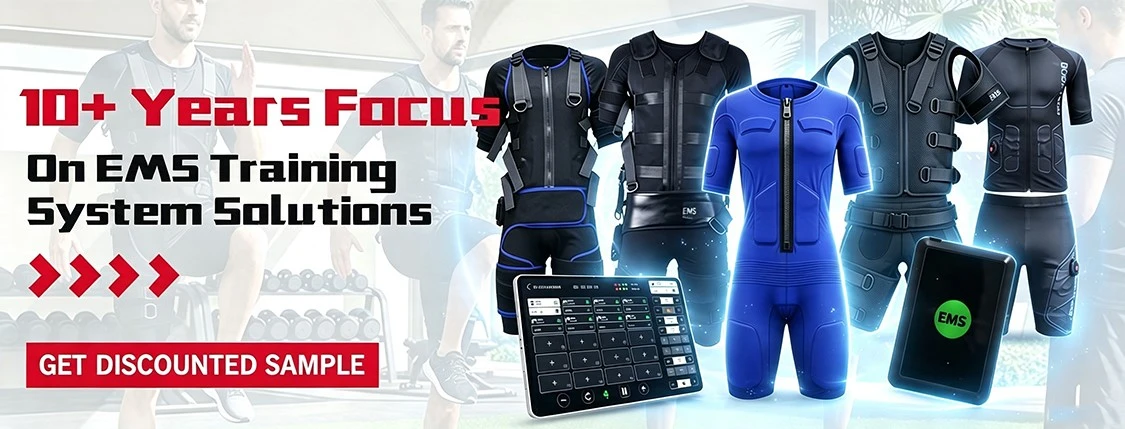
BODYTECH distinguishes itself through ISO and CE certifications, a proprietary wireless EMS training system, multi-device management software, and a versatile lineup of training suit. It also offers customized curriculum design and certified trainer training programs-delivering professional performance at a competitive price point, making it an attractive option for cost-conscious studios without compromising quality or safety.
Scientific Reality: EMS as a Supplement, Not a Substitute
From a physiological standpoint, EMS should be viewed as a powerful adjunct to conventional resistance training-not a replacement. Deep-muscle fiber activation only translates into functional gains when paired with correct movement mechanics, proper form, and progressive overload. Marketing campaigns that pitch EMS as a ''passive'' or ''lazy'' fitness shortcut are not supported by current sports science. Sustainable results still demand active effort, technical proficiency, and consistent practice.