


EMS club wireless training vest

Overview
--Quick Details of EMS club wireless training vest
Type:Other
Feature:Anti-Puffiness, Skin Tightening, Cellulite Reduction, Detox, Wrinkle Remover, Weight Loss
Operation System:ems muscle stimulator
Place of Origin:Guangdong, China
Brand Name:bodytech
Model Number:BBModel907
Application:For Commercial & Home Use, home/gym/sport field
Product name:EMS club wireless training vest
Plattform:Android/iOS phone,tablet
service:OEM ODM
Technology:advanced EMS electro fitness
Suit Material:Spandex/Cotton/silver fiber/silicone
Size:XS-XXL
Agent:OEM Device or Software
Keywords:EMS club wireless training vest
Payment term:TT/Paypal /Western union
Warranty:Electro Muscle Stimulation Vest (3 months) , Engergy (1 years)
Certification:CE, CTT, EMC, ROHS, SGS,GTS.
Shipping (No need to pay extra shipping cost):DHL,UPS,FedEX,EMS,TNT and etc.
Lead time:7-10 days after receiving your payment
--Supply Ability Of EMS club wireless training vest
Supply Ability:200 Piece/Pieces per Month
--Packaging & Delivery of EMS club wireless training vest
Packaging Details:International export cartons , wooden box
Port:Guangzhou
--Parameter of EMS club wireless training vest
Equipment weight:590g
Equipment size:135*38*90mm
Period of use:2 year
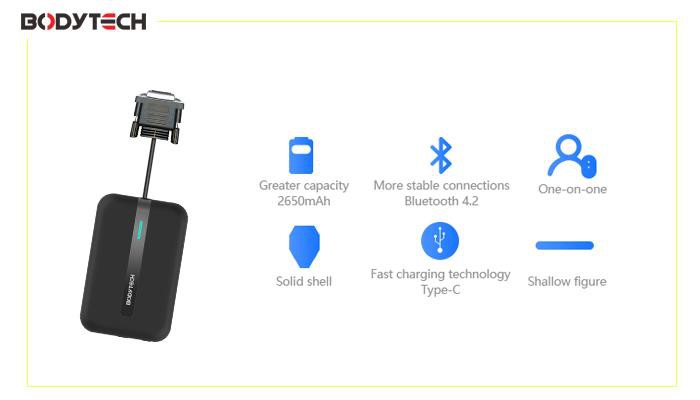
Battery capacity:6200mAh
Charging rating:DC5V-Must be a standard 5V charge
Battery voltage:DC3.85V
The output voltage:<=160V or <=100V
Output frequency:0.5-200Hz
Output pulse width:30-500us
Operating temperature and humidity:10℃-40℃,30%-85%RH
Transport and storage temperature and humidity:-40℃~55℃,10%RH~93%RH
Operating pressure:860-1060hPa
Transportation and storage pressure:500hPa~1060hPa

Efficacy and Safety of Low Frequency Whole-Body Electromyostimulation (EMS club wireless training vest) to Improve Health-Related Outcomes in Non-athletic Adults.
Exercise positively affects most risk factors, diseases and disabling conditions of middle to advanced age, however the majority of middle-aged to older people fall short of the exercise doses recommended for positively affecting cardio-metabolic, musculoskeletal and neurophysiological fitness or disabling conditions. Whole-Body Electromyostimulation (EMS club wireless training vest) may be a promising exercise technology for people unable or unmotivated to exercise conventionally. However, until recently there has been a dearth of evidence with respect to WB-EMS-induced effects on health-related outcomes. The aim of this systematic review is to summarize the effects, limitations and risks of WB-EMS as a preventive or therapeutic tool for non-athletic adults. Electronic searches in PubMed, Scopus, Web of Science, PsycINFO, Cochrane and Eric were run to identify randomized controlled trials, non-randomized controlled trials, meta-analyses of individual patient data and peer reviewed scientific theses that examined WB-EMS-induced changes of musculoskeletal risk factors and diseases WB-EMS-induced changes of functional capacity and physical fitness WB-EMS-induced changes of cardio-metabolic risk factors and diseases Risk factors of WB-EMS application and adverse effects during WB-EMS interventions. Two researchers independently reviewed articles for eligibility and methodological quality. Twenty-three eligible research articles generated by fourteen research projects were finally included. In summary, thirteen projects were WB-EMS trials and one study was a meta-analysis of individual patient data. WB-EMS significantly improves muscle mass and function while reducing fat mass and low back pain. Although there is some evidence of a positive effect of WB-EMS on cardio-metabolic risk factors, this aspect requires further detailed study. Properly applied and supervised, WB-EMS appears to be a safe training technology. In summary, WB-EMS represents a safe and reasonable option for cohorts unable or unwilling to join conventional exercise programs. However, much like all other types of exercise, WB-EMS does not affect every aspect of physical performance and health.

Hence, innovative, time-efficient, joint-friendly, highly individualized and closely supervised exercise technologies might be a good choice for people looking to maintain or improve their health and physical fitness. Whole-Body Electromyostimulation (EMS club wireless training vest), a technology that is based on the recognized local EMS but addresses up to nine (main) muscle groups simultaneously each with dedicated intensity might be such a choice. Indeed, considering the rather low exercise volume of 1–2 sessions of 20 min/week, the low voluntary intensity and the high degree of supervision and individualization of present WB-EMS settings might attract people with low affinity to conventional exercise programs.

However, until recently there has been a considerable lack of evidence with respect to WB-EMS-induced effects on health-related outcomes. The aim of this systematic review is therefore to provide evidence for the effects, limitations and risks of WB-EMS as a preventive or therapeutic tool for non-athletic adults. So as to present reliable and representative data, we focus on WB-EMS frequencies 80–85 Hz, (considered as “low-frequency WB-EMS), the predominantly applied type of WB-EMS in commercial settings and—to our best knowledge—the only type of WB-EMS that has been evaluated in scientific studies.

In order to present a comprehensible overview, we have structured this systematic review in four sections. Each of these sections are reported and discussed separately:
(1) WB-EMS-induced changes of musculoskeletal risk factors and diseases.
(2) WB-EMS-induced changes of functional capacity and physical fitness.
(3) WB-EMS-induced changes of cardio-metabolic risk factors and diseases.
(4) Risk factors of WB-EMS application and adverse effects during WB-EMS interventions.
There is considerable evidence that “low-frequency WB-EMS” / < 100 Hz significantly and clinical relevantly increases health-related parameters in moderately trained and untrained middle-aged to older non-athletic cohorts. The most prominent effect of WB-EMS is, however, the significant impact on body composition. In this context, sarcopenia and sarcopenic obesity in the elderly might be the most promising targets; however, functional aspects and to a lesser extent cardio-metabolic parameters can also be favorably addressed by WB-EMS. With respect to the dimensions of WB-EMS-induced effects, one study with untrained middle aged men reported that the effect on body composition, muscle strength and cardio-metabolic outcomes were similar to a less time effective and more challenging high intensity resistance exercise training with a work to failure+ protocol. Regarding their applicability, a recent study successfully applied a “high effort training” protocol similar to HIT in people 61-80 years old. Nonetheless, the acceptance of a HIT protocol by sedentary older people remains limited; thus, HIT may not be a genuine exercise training option for most older people. Concerning the corresponding attractiveness of WB-EMS, all the projects reported high adherence with low drop-out (0–10%) and high attendance (76–100%) rates. However, one main reason for the attractiveness might not relate to the WB-EMS technology per se, but to the high level of assistance, supervision and interaction between instructor and the maximum of two participants: in effect, a kind of personal training. Of further crucial importance, none of the studies, even when focusing on the vulnerable cohort functionally limited and/or morbid older people , reported any adverse or unintended side effect of WB-EMS application, even though study periods ran for up to 12 months of intervention. Thus, low-frequency WB-EMS can be considered as a safe training technology at least when practiced in the closely supervised setting applied by all the projects listed above. From the studies included, we think it is legitimate to generalize the results of this review at least on the cohorts of sedentary middle aged to older people unable or unmotivated to join conventional exercise programs. For these people WB-EMS might be a reasonable option for improving health-related outcomes including body composition and physical fitness.

Hot Tags: ems club wireless training vest, suppliers, manufacturers, customized, buy, price, quotation


